Australian Succulents
Attila Kapitany


Seed Kits for Sale
PLANT SALES CLOSED UNTIL OCTOBER 1
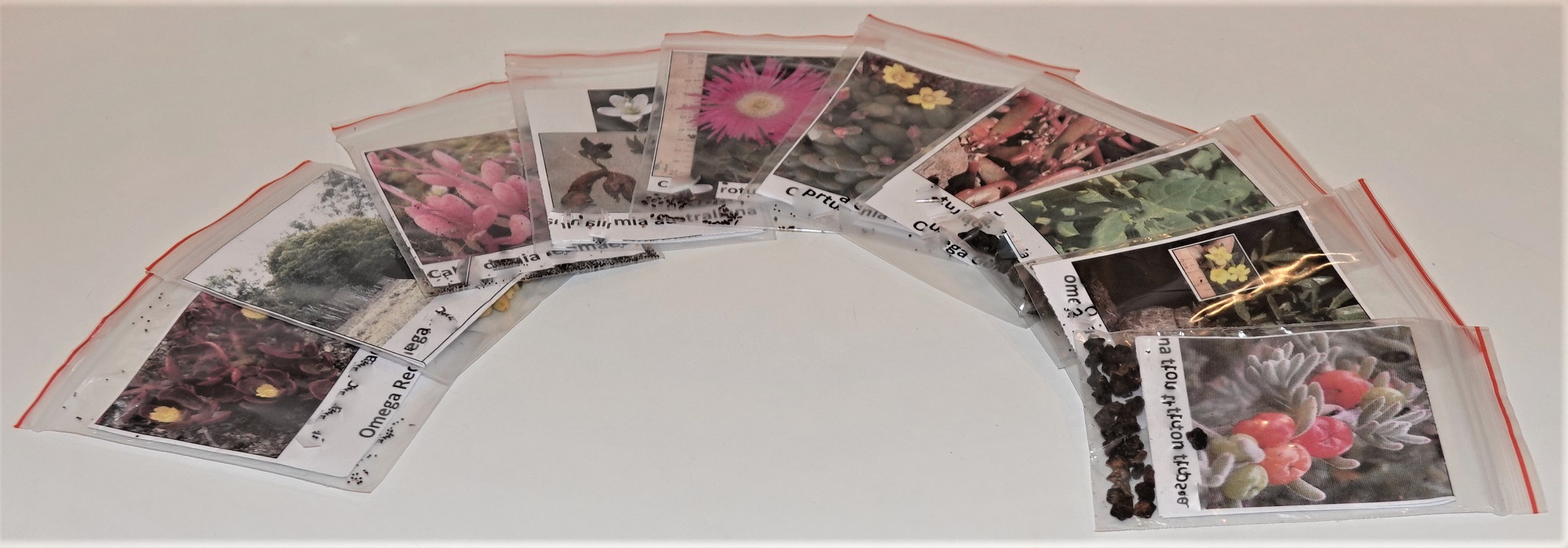
We are offering 10 packets of seeds of mostly unusual and interesting Australian native plants that are edible. Most of these are succulents that feature in the book titled, 'Edible Australian Succulents'. This seed kit is ONLY available with the book. The intention is to promote the use and appreciation of these plants in the kitchen as food! (While some of these are decorative plants in their own rights, we are promoting them in this kit primarily as food.) This is may not be well suited to a cactus and succulent collector.
Sustainable harvest - we are very pleased to state that none of this seed was collected from habitat. We have a large growing field where we have our own mature plants from which to harvest our own seed.
But we still have some individual seed packets available in our eBay store, link on our Home Page. Also in the 'General Seeds for Sale' section of this website. No international sales of seeds.
BUY 'AUSTRALIAN EDIBLE SUCCULENTS' BOOK AND SEED KIT:
*** Cannot post seeds to WA, NT or TAS ***
- The selection in the seed kit cannot be changed however some extra individual seed packets can be purchased separately for $AUD5.00 each. (See above in red)
- Keep in mind that the website, books and seeds are basically only intended to promote and extend the interest in Australian succulent plants. Our stock of some seed is very limited.
Details:
This selection of ten (generally easy to grow) plant species is a representation of a broad range of succulent plants incorporating annuals and perennials. Some of these plant seeds are common and some are very rare. Quantities in each packet will vary considerably to reflect this. The most common type may have 200 or more seeds, the rarest may have only 20 seeds. Therefore consider planting some in spring, but save some for summer trials or in fact winter trials. Results may surprise you for your climate and conditions.
- Most are an important food source or shelter for Australian fauna and can also be used to attract birds to the garden.
Caution is required before any plant is eaten by humans as sometimes it is only the preparation or cooking that makes a plant edible. Also which part/s of the plant is edible? More information on this can be found here on the 'Edible Plants' page or in the book, Edible Australian Succulents.
Many gourmet restaurants would be tempted by native delicacies to include in their menu. ‘Bush tucker’ or bush foods can now be taken to a new level with this endeavour from which valuable information can be compiled.
Most of the seed is considered viable however experimentation may be required for optimum germination results e.g. any seed purchased should be divided into smaller portions and trialled under different conditions.
The seed collection is intended for gardeners and vegetables growers (not cactus and succulent collectors)! We will not be giving a list of all the 10 available here, in part because the varieties may change seasonally or availability. Of the 10 we will try to include as much variety as possible. Some will only have edible roots; some will only have edible fruit, some will have edible leaves, while others will offer a mixture of features. Importantly, we have gone to considerable effort to put together a good mix for a balanced meal! Most of the seeds we offer are of plants featured in the book titled, ‘Edible Australian Succulents', but NOT all.
MORE DETAILS ON THE CARE AND MANAGEMENT OF SEEDS AND SEED PLANTING WILL BE INCLUDED WITH THE KIT, ESPECIALLY TO HELP BEGINNERS.
Previous page: Seeds, Sale and Care
Next page: General Seeds for Sale